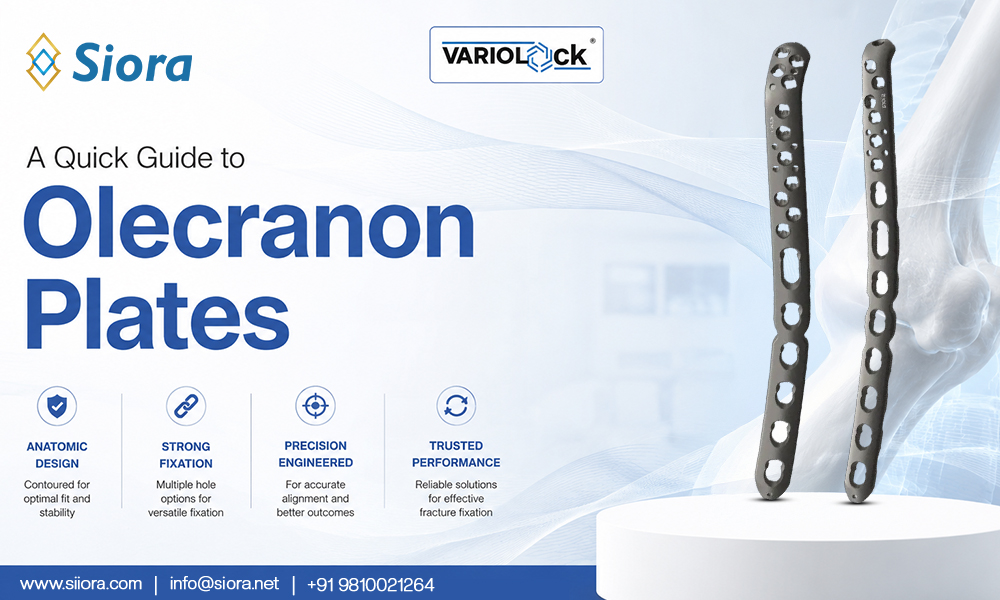
The olecranon is the bony tip of the elbow that forms the upper part of the ulna. It plays a crucial role in elbow movement by providing the attachment point for the triceps tendon, which allows the arm to straighten. Because of its exposed position, the olecranon is vulnerable to fractures from falls, direct impacts, sports injuries, or road accidents.
An olecranon fracture can significantly affect arm function. Patients often experience severe pain, swelling, bruising, and difficulty extending the elbow. When the fracture is displaced or involves multiple fragments, surgical treatment is often necessary to restore joint alignment and regain normal function.
What Are Olecranon Plates?
Olecranon plates are specialized orthopedic implants designed to stabilize fractures of the olecranon. They are anatomically contoured to match the natural shape of the upper ulna, allowing surgeons to secure fractured bone fragments while maintaining proper alignment.
These plates are commonly manufactured from medical-grade titanium alloys or stainless steel, offering excellent strength, durability, and biocompatibility. The plates work alongside compatible screws that firmly anchor the implant to the bone, creating a stable fixation that supports healing.
When Are Olecranon Plates Used?
Orthopedic surgeons recommend olecranon plates for fractures that cannot be treated effectively with conservative methods such as casting or splinting. Common indications include:
- Displaced olecranon fractures
- Comminuted fractures involving multiple bone fragments
- Unstable fracture patterns
- Fractures extending into the elbow joint
- Revision surgeries after failed fixation
Stable internal fixation allows patients to begin controlled elbow movement earlier, reducing the risk of joint stiffness during recovery.
Key Features of Modern Olecranon Plates
Modern implant designs are developed to improve surgical outcomes while simplifying the fixation process. Some notable features include:
Anatomically Contoured Design
The plates are shaped to closely follow the natural anatomy of the proximal ulna, minimizing the need for extensive bending during surgery.
Locking Screw Technology
Many olecranon plates incorporate locking holes that create a fixed-angle construct. This improves stability, especially in osteoporotic bone or complex fracture patterns.
Low-Profile Construction
A slimmer plate profile helps reduce soft tissue irritation around the elbow, improving patient comfort after surgery.
Multiple Screw Options
Strategically positioned screw holes allow surgeons to capture various fracture fragments while optimizing fixation strength.
What Are the Benefits of Olecranon Plate Fixation?
Olecranon plates have become a preferred treatment option for many elbow fractures because they offer several clinical advantages.
Strong Fracture Stability
Rigid fixation helps maintain proper bone alignment throughout the healing process, even in challenging fracture patterns.
Early Mobilization
Stable fixation enables surgeons to introduce controlled rehabilitation earlier, which can improve elbow motion and reduce stiffness.
Reliable Healing
Accurate fracture reduction combined with stable fixation supports predictable bone healing and functional recovery.
Versatility
Olecranon plates are available in multiple sizes and configurations, allowing surgeons to select the most appropriate implant based on the patient’s anatomy and fracture characteristics.
Surgical Considerations
During surgery, the fractured bone fragments are carefully repositioned before the plate is secured using appropriate screws. The procedure aims to restore the joint surface, maintain elbow stability, and preserve normal arm function.
Following surgery, rehabilitation plays an important role in recovery. Patients usually begin supervised range-of-motion exercises once the surgeon determines that adequate stability has been achieved. Recovery time varies depending on the severity of the injury, patient health, and adherence to rehabilitation protocols.
Conclusion
Olecranon plates have transformed the management of complex elbow fractures by providing stable internal fixation and supporting early functional recovery. Their anatomically contoured design, locking plate technology, and durable construction make them a dependable solution for treating displaced and unstable olecranon fractures. When combined with careful surgical technique and a structured rehabilitation program, these implants help restore elbow function, promote reliable bone healing, and enable patients to return to their daily activities with improved confidence and mobility.

