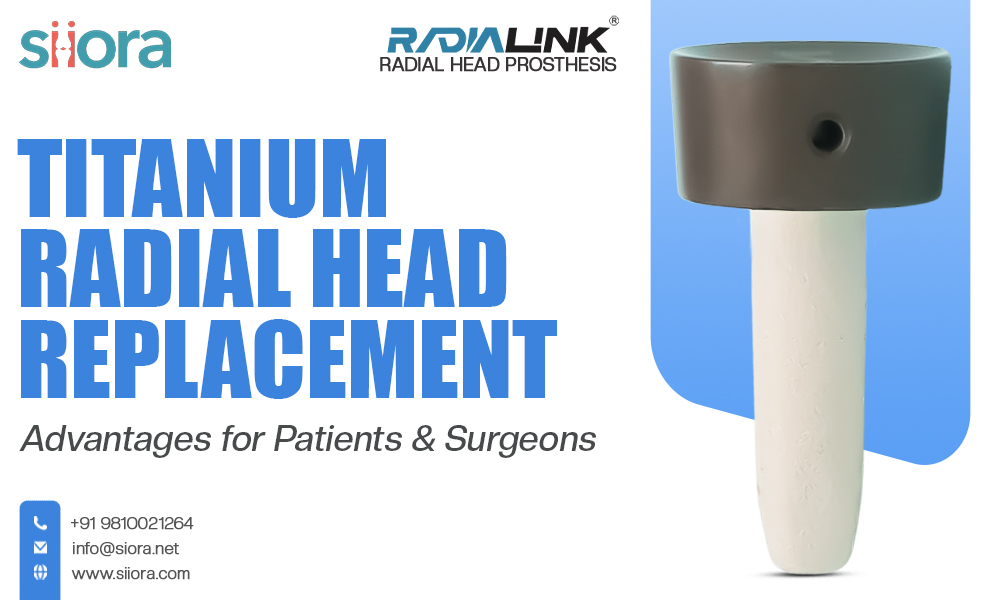
Injuries around the elbow can be difficult to manage, particularly when the radial head is severely fractured. In many cases, small fragments make it hard to reconstruct the bone with screws or plates. When repair is not possible, radial head replacement becomes a practical solution. Over the years, titanium radial head implants have become a preferred option for many orthopedic surgeons. Their design and material properties help restore elbow stability while allowing patients to return to daily activities with fewer complications.
Understanding Radial Head Replacement
The radial head plays an important role in elbow stability and forearm rotation. When a fracture is too complex to repair, removing the damaged bone and replacing it with a prosthetic radial head can help maintain joint alignment. This procedure is commonly performed in cases of comminuted fractures, elbow instability, or injuries associated with ligament damage.
Modern radial head implants are designed to mimic the natural anatomy of the joint. When positioned correctly, they help restore motion while maintaining the normal biomechanics of the elbow.
Why is Titanium Commonly Used?
Titanium has become one of the most widely used materials for orthopedic implants, including radial head prostheses. One reason for this is its compatibility with the human body. Titanium forms a protective oxide layer that reduces the chances of corrosion and helps the implant remain stable over time.
Another advantage is weight. Titanium implants are lighter than many traditional metal implants. While patients may not directly notice the difference, a lighter implant can reduce unnecessary stress on surrounding bone and soft tissues.
Benefits for Patients
For patients, the goal of radial head replacement is to restore elbow function and reduce long-term discomfort. Titanium implants contribute to this in several ways. First, they are well tolerated by the body, which lowers the risk of adverse tissue reactions. Second, their mechanical properties allow the joint to move more naturally.
Patients who receive a properly fitted radial head implant often regain good elbow motion with appropriate rehabilitation. This allows them to return to everyday tasks such as lifting objects, rotating the forearm, and performing routine activities without persistent instability.
Another practical advantage is durability. Titanium implants are known for their strength and resistance to wear, which supports long-term performance.
Advantages for Surgeons
From a surgical perspective, titanium radial head implants provide reliable fixation and predictable outcomes. Their design allows accurate sizing and placement, which is important for restoring elbow mechanics. Many implant systems also include modular components, giving surgeons flexibility during the procedure.
Titanium also produces fewer imaging artifacts compared with some other metals. This helps surgeons evaluate implant position and fracture healing during follow-up visits.
Conclusion
Titanium radial head replacement has become a reliable solution for treating complex radial head fractures. Its biocompatibility, strength, and lightweight properties make it suitable for both patients and surgeons. When combined with proper surgical technique and rehabilitation, titanium orthopedic implants can help restore elbow stability and function. As orthopedic technology continues to evolve, innovations in implant materials and design will likely further improve the results of procedures like radial head replacement.
 trauma implants manufacturers