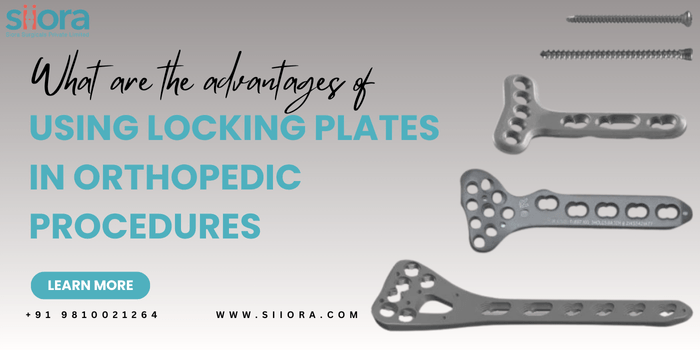
Orthopedic procedures, particularly those involving bone fractures, have significantly advanced with the introduction of innovative technologies. One such advancement is the use of locking plates, which have become an essential tool in modern orthopedic surgery. Orthopedic locking plates are a type of internal fixation device that offers superior stability, better healing outcomes, and enhanced precision when used in bone fracture repair. They are designed with screws that lock into the plate, creating a fixed-angle construct that provides numerous benefits. Here are the key advantages of using locking plates in orthopedic procedures.
Importance of Using Locking Plates for Orthopedic Procedures
Improved Fracture Stability
One of the primary benefits of locking plates is their ability to provide enhanced stability to fractures. Traditional plates rely on friction between the plate and bone to hold the bone fragments in place. However, locking plates utilize screws that lock into the plate, ensuring a secure connection between the plate and the bone. This locking mechanism prevents micromotion at the fracture site, which can lead to delayed healing or malunion. The increased stability provided by locking plates makes them particularly effective in treating fractures in osteoporotic bones or complex fractures where traditional fixation methods may be less effective.
Better Biomechanical Advantage
Locking plates provide superior biomechanical advantages, especially in areas where the bone is weak or compromised. In patients with osteoporosis or in those with fractures near the joint, the bone quality may not be ideal for traditional plate fixation. The locking screws ensure that the plate remains securely attached to the bone, regardless of its density. This reduces the chances of screw pullout or loosening, ensuring that the fixation remains intact throughout the healing process. Additionally, locking plates distribute the forces across the fracture site more evenly, which helps to reduce the risk of complications such as plate bending or screw failure.
Less Surgical Dissection Required
In traditional fracture fixation methods, surgeons may need to perform extensive soft tissue dissection to achieve the desired positioning of the plate and screws. Locking plates, on the other hand, allow for less invasive procedures, as they do not require as much disruption of the surrounding tissue. With the locking mechanism, the plate can be placed more precisely without needing to apply significant force. This reduction in surgical dissection helps to preserve blood supply to the bone and surrounding tissues, minimizing the risk of complications like infection and wound healing issues.
Versatility in Treatment
Locking plates are highly versatile and can be used in a wide range of fractures, including fractures of the long bones, joints, and complex fractures that are difficult to treat with traditional methods. The design of locking plates allows for fixation in areas with limited soft tissue support, such as the distal femur or humerus, where conventional plating might fail. Furthermore, locking plates can be used for both periarticular fractures (those near joints) and diaphyseal fractures (those along the shaft of bones). This versatility makes them a go-to option for orthopedic surgeons in many complex fracture scenarios.
Faster Recovery and Healing
Because locking plates provide secure fixation with minimal disruption to the surrounding bone and soft tissues, patients tend to experience faster recovery times. The stability offered by locking plates promotes better alignment of bone fragments, which leads to more efficient healing. Additionally, by reducing the risk of non-union (failure to heal) or malunion (healing in an incorrect position), locking plates help to achieve optimal bone healing, allowing patients to regain mobility and function sooner than with traditional methods.
Reduced Risk of Infection
In certain situations, especially with fractures that require open reduction and internal fixation (ORIF), the risk of infection is a concern. The locking mechanism in these plates often allows for more precise placement, reducing the need for larger incisions and extensive exposure to the surgical site. With less tissue disruption and more secure fixation, there is a lower likelihood of post-operative infections, which can significantly affect recovery outcomes. Moreover, locking plates often come in a range of materials designed to minimize infection risk, such as titanium, which is known for its biocompatibility.
Enhanced Postoperative Functional Outcomes
Locking bone plates allows for greater precision during the procedure, which ultimately leads to better postoperative functional outcomes. With improved fracture fixation, patients often experience better alignment of the bone, reduced deformity, and a more stable joint function after healing. This leads to a higher quality of life and a reduced need for follow-up surgeries or corrective procedures. Additionally, by minimizing complications, locking plates contribute to a smoother and more predictable recovery process.
Conclusion
The use of locking bone plates in orthopedic procedures represents a major advancement in the field of bone fracture management. Their ability to provide superior stability, improve biomechanical support, reduce surgical trauma, and promote faster recovery makes them a preferred choice for treating various types of fractures. With these advantages, locking plates offer significant improvements in the quality of care for orthopedic patients, enhancing both the healing process and long-term functional outcomes. As orthopedic technology continues to evolve, locking plate systems are likely to remain a cornerstone of modern fracture fixation techniques.To learn about the recent advancements in the orthopedic industry and meet renowned orthopedic surgeons from across the globe, register for the AAOS Annual Meeting 2025.
 trauma implants manufacturers